

The first time I tried to understand how a bill really becomes law, I thought it would take maybe… ten minutes.
Ten.
Minutes.
You know—Google it, read a quick explanation, maybe remember that catchy school song from the show Schoolhouse Rock! where the cartoon bill sits on the steps singing about becoming a law.
Easy, right?
Ha.
Hahahaha.
Yeah… no.
The actual process is more like assembling IKEA furniture while blindfolded and someone keeps changing the instructions halfway through.
And the weird part? Most Americans think they understand the process. We learned the basic version in school. Bill gets introduced. Congress votes. President signs.
Boom.
Law.
But the truth about how a bill becomes law in the US is messier, slower, and occasionally absurd.
Grab coffee. Or pizza. This story gets weird.
The Cute Cartoon Version We Learned in School
Remember the simple version?
- A lawmaker writes a bill
- Congress debates it
- They vote
- The president signs it
Done.
That version is adorable.
Like believing the tooth fairy runs a tiny financial system under your pillow.
Because in real life, the path of how a bill really becomes law involves committees, negotiations, amendments, lobbying, political drama, and sometimes a bill disappearing into what I like to call the Legislative Bermuda Triangle.

Let’s walk through the real thing.
Step 1: Someone Has an Idea (Usually a Politician… or a Lobbyist)
Every law starts as an idea.
A member of the United States Congress decides something needs to change.
Maybe healthcare rules.
Maybe something super specific like funding for rural bridges.
But here’s a little behind-the-scenes detail people don’t talk about much:
Sometimes the original idea doesn’t even come from the politician.
It can come from:
- advocacy groups
- industry groups
- think tanks
- even large corporations
Which is where things start getting… complicated.
Step 2: The Bill Gets Introduced (And Then… Waits)
Once a bill is written, a member of Congress introduces it.
Sounds dramatic.
But honestly? It’s mostly paperwork.
The bill gets a number. It gets assigned to a committee.
And then something funny happens.
Nothing.
Sometimes bills just sit there.
Like leftovers in the fridge that nobody remembers buying.
Thousands of bills get introduced every year, but only a small percentage move forward.
Which is the first reason people say the US Congress lawmaking process feels broken.
Ideas pile up.
Most never go anywhere.
Step 3: The Committee Maze
If a bill survives the waiting phase, it goes to a committee.
Committees are basically smaller groups of lawmakers who specialize in specific topics.
Examples:
- healthcare
- defense
- agriculture
- finance
And this is where bills often live or die.
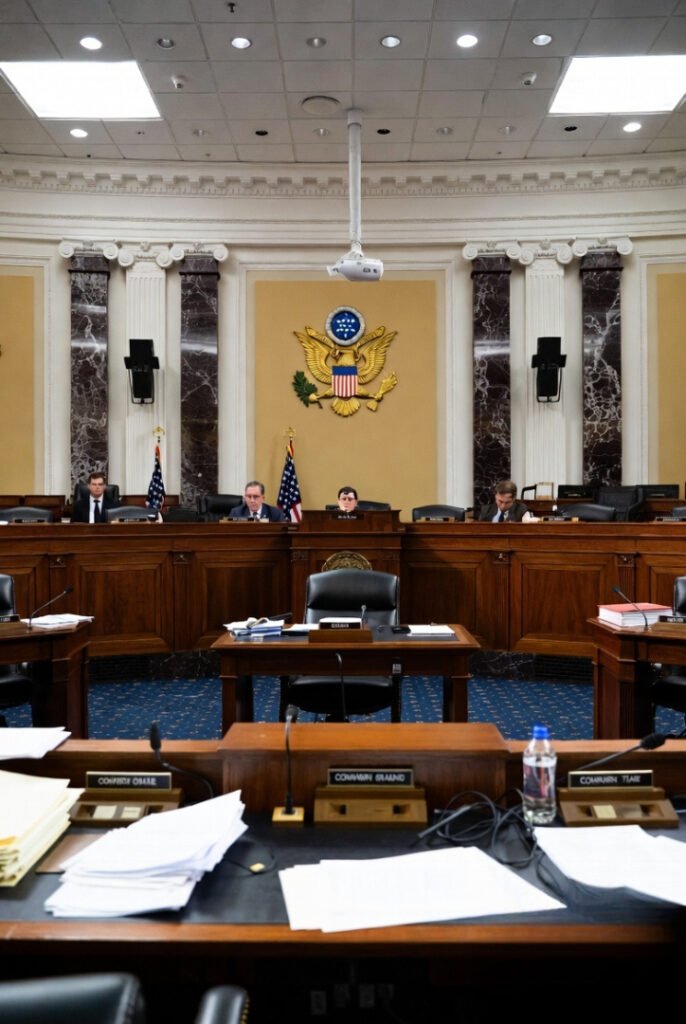
Committees hold hearings.
Experts testify.
Lawmakers argue.
Sometimes the bill gets rewritten completely.
I once watched a hearing clip where a senator grilled a tech CEO for five minutes and then accidentally muted himself.
Democracy in action.
Step 4: Amendments… and More Amendments
Here’s where things get wild.
Bills can be changed.
A lot.
Lawmakers propose amendments—basically edits to the bill.
Some are small tweaks.
Others completely reshape the original proposal.
Imagine writing a grocery list.
Then your roommates keep adding stuff:
Milk
Bread
Eggs
Dragon fruit
A kayak?
Suddenly your simple list has turned into a Costco adventure.
That’s what happens in the legislative process sometimes.
Step 5: The Debate (AKA Political Theater)
Eventually the bill reaches the floor of Congress.
This is where the public debates happen.
Speeches.
Arguments.
Occasional dramatic one-liners.
It can look intense on TV.
But behind the scenes, a lot of decisions were already negotiated.
Think of it like the finale of a reality show.
Most of the real drama happened earlier.
Step 6: The Vote
Finally.
A vote.
Members of Congress vote yes or no.
If the bill passes one chamber (like the United States House of Representatives), it goes to the other chamber (the United States Senate).
And guess what?
The process starts again.
Debates.
Committees.
Amendments.
Sometimes the Senate changes the bill so much the House has to review it again.
Which is part of why people complain about problems with the US legislative system.
Things move slowly.
Very slowly.
Step 7: The President’s Decision
If both chambers pass the same version of the bill, it lands on the desk of the President of the United States.
Now the president has options:
- Sign the bill → becomes law
- Veto the bill → send it back
- Ignore it (which can lead to a “pocket veto”)
If the president vetoes it, Congress can still override the veto with a big enough vote.
Which rarely happens.
Politics gets spicy at this stage.
So… Why Do People Say the System Is Broken?
Now we get to the awkward part.
A lot of people believe the process of how a bill really becomes law is dysfunctional.
Not completely broken.
But definitely… creaky.
Here are a few reasons people argue about.
1. It Moves Painfully Slow
Major issues sometimes take years to address.
Meanwhile real-world problems move faster.
Technology changes.
Economic conditions shift.
But legislation often crawls along.
2. Lobbying Has Huge Influence
Lobbying isn’t illegal.
In fact, it’s part of democracy.
But critics say wealthy industries have far more influence than regular citizens.
Which raises uncomfortable questions about whose voices matter most.
3. Partisan Gridlock
This is the big one.
If opposing political parties refuse to cooperate, legislation stalls.
Bills die.
Debates turn into shouting matches.
The system was designed for compromise.
But compromise has become… rare.
4. Too Many Hidden Steps
Most Americans never see the committee negotiations or behind-the-scenes deals.
Which makes the process feel mysterious.
Or shady.
Transparency is improving, but the legislative maze still confuses people.
A Weird Truth About the System
Here’s something that surprised me.
The system was designed to be slow.
The founders didn’t want laws changing constantly.
So they built a process full of checks and balances.
Which sometimes prevents bad laws.
But also sometimes prevents good ones.
It’s like installing fifteen locks on your front door.
Great for security.
Annoying when you’re carrying groceries.
My Favorite Random Fact About Congress
At one point while researching how a bill becomes law in the US, I discovered something hilarious.
Congress once debated whether pizza counted as a vegetable in school lunches.
Pizza.
Vegetable.
I stared at my laptop for a full minute.
Politics is strange, man.
One Last Thought
The process of how a bill really becomes law is messy, slow, occasionally frustrating… and yet somehow still the backbone of American democracy.
It’s imperfect.
Clunky.
Sometimes ridiculous.
But every law that shapes daily life—from highways to healthcare—went through that complicated maze.
Which means behind every policy headline there’s a long story of debates, compromises, and political drama.
And honestly?
Understanding the process makes politics feel a little less mysterious.
Still messy.
But less mysterious
Suggested Outbound Links
Helpful resources for understanding legislation:
Both provide real-time tracking of bills moving through Congress.


