

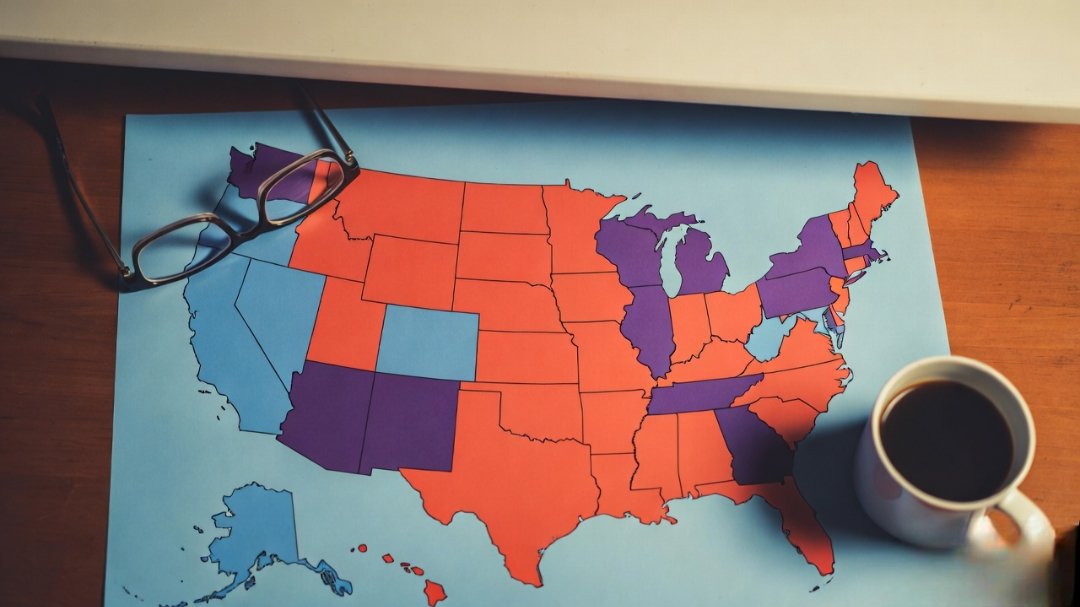
The whole how swing states could decide the future again topic popped into my head last fall while I was sitting on my couch eating popcorn and watching election coverage like it was the Super Bowl.
Except… instead of touchdowns, it was maps.
Red states.
Blue states.
And then those mysterious gray-ish-purple ones.
The famous swing states.
You know the ones. The places that every candidate suddenly loves more than their own hometown.
It’s kinda funny when you think about it.
Candidates will campaign all over the country during primaries, sure. But once the general election hits? Suddenly it feels like the entire political universe revolves around a handful of states.
Florida.
Pennsylvania.
Michigan.
Arizona.
Georgia.
Wisconsin.
If politics were a reality show, those states would be the final judges panel.
And the rest of us are just watching from the audience.
But why does this keep happening? Why do these few states keep deciding everything?
Grab coffee. Or tea. Or leftover pizza like I usually have when thinking about politics at weird hours.
Let’s talk about it.
The First Time I Heard the Term “Swing State”
I remember the exact moment.
I was about twelve.
My dad had the TV on during election night—one of those marathon broadcasts where anchors stare at giant touchscreens for six straight hours.
At some point the commentator said something like:
“If this candidate wins Ohio, the election could flip.”
And I remember thinking… wait what?
How can one state flip the entire election?
My dad tried explaining the Electoral College to me.
Big mistake.
He grabbed a napkin and started drawing boxes.
Then arrows.
Then he paused and said:
“Actually… this system is weird.”
Which, honestly, is the most accurate explanation of American elections I’ve ever heard.
What Even Is a Swing State Anyway?
Okay quick explanation without the boring textbook voice.
A swing state is a state where voters regularly switch between political parties.
One election it might vote Democrat.
Next election? Republican.
Basically the political equivalent of a coin toss.
Other states are more predictable.
California?
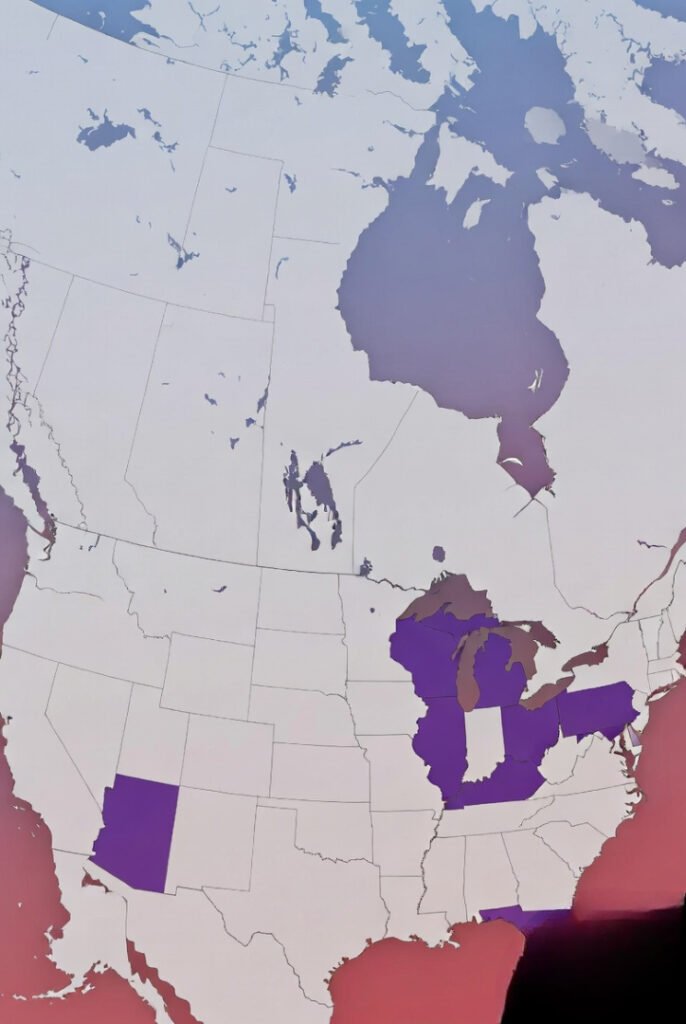
Pretty reliably blue.
Oklahoma?
Pretty solidly red.
But swing states?
Nobody knows until the votes are counted.
And that uncertainty is what makes them so powerful.
Why Swing States Matter So Much in the Electoral College
Here’s where things get interesting.
The U.S. president isn’t chosen directly by the national popular vote.
Instead we have the Electoral College.
Each state gets a certain number of electoral votes.
Whoever wins the majority of those votes becomes president.
Which means winning big states is important.
But winning competitive states is everything.
Because candidates already know they’ll probably win certain states and lose others.
So the real battle happens in the middle.
The swing states.
Think of it like a basketball game where both teams already know the score for half the court.
The real action happens in the last few possessions.
Campaigns Basically Live in Swing States
If you live in a swing state during election season… congratulations.
You are famous.
Candidates visit constantly.
Rallies everywhere.
Ads every five seconds on TV.
Phone calls.
Text messages.
Mailers stacked in your mailbox like political pancakes.
Meanwhile if you live in a solid red or blue state?
Campaigns kinda ignore you.
Which feels unfair.
But from a strategy perspective… it makes sense.
Why spend millions trying to win a state you’re guaranteed to lose?
My Friend in Pennsylvania
One of my college friends lives in Pennsylvania now.
And during the last presidential election she sent me a photo of her mailbox.
It was ridiculous.
At least 15 campaign flyers.
All on the same day.
She texted me:
“If I hear the word ‘freedom’ one more time I might move to Canada.”
Swing state life is intense.
The Usual Swing State Suspects
These states tend to decide modern elections.
Pennsylvania
Often called the keystone of elections.
Michigan
Industrial towns, big cities, and everything in between.
Wisconsin
Famously close races.
Arizona
Rapidly changing demographics.
Georgia
One of the newer swing states.
And occasionally:
- Nevada
- North Carolina
All depending on the political climate.
It’s like a rotating cast of characters in a drama series.
The Weird Math of Winning Elections
Here’s the strange part.
A candidate can win the national popular vote… and still lose the election.
That’s happened before.
And when it does, swing states are usually the reason.
Because if a candidate narrowly loses several key states, the electoral math flips.
Even if millions more people nationwide voted for them.
It’s one of those moments where people stare at the results and go:
“Wait… what?”
Why Swing States Keep Changing
Here’s something fascinating.
States don’t stay swing states forever.
Political maps evolve.
Populations shift.
Cities grow.
Industries change.
Florida used to be the ultimate swing state.
Now it leans more one direction.
Meanwhile states like Georgia and Arizona have become more competitive.
Politics moves like weather patterns.
Slow at first… then suddenly different.
The Media Obsession With Swing States
Election night coverage turns into a weird ritual.
You’ll see reporters standing in diners in Wisconsin.
Or interviewing voters outside gas stations in Arizona.
Suddenly every ordinary person in a swing state becomes a political oracle.
A guy named Dave eating pancakes might end up representing the mood of the entire electorate.
No pressure, Dave.
Why Voters in Swing States Have So Much Power
Here’s the reality.
If you vote in a swing state, your vote arguably carries more strategic weight.
Because campaigns are actively trying to win you over.
Policy promises.
Town halls.
Local investments.
Meanwhile voters in safe states often feel like their vote changes less.
That perception isn’t entirely wrong.
Which is why some people argue for electoral reform.
But that’s a whole other rabbit hole.
My Personal Election Night Tradition
Every presidential election night I do the same thing.
I order pizza.
Turn on the results coverage.
And watch the electoral map slowly fill in.
At some point around midnight the commentators always start saying the same phrase:
“All eyes are now on the swing states.”
Which basically means:
Nobody knows who’s winning yet.
The tension is weirdly exciting.
Like the final minutes of a playoff game.
Except instead of a trophy… it’s the presidency.
Two Interesting Places to Explore Election Data
If you like digging into election maps or predictions, these sites are surprisingly addictive:
- https://www.270towin.com (interactive electoral maps)
- https://www.fivethirtyeight.com (data-driven election analysis)
Just warning you.
You might lose an hour clicking around.
I definitely have.


