

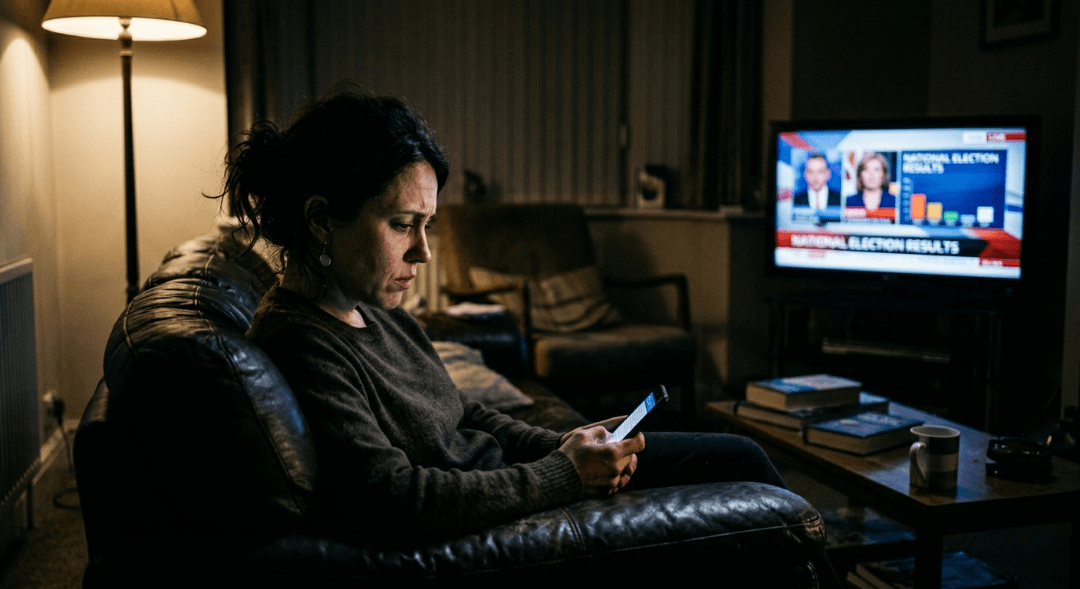
Americans Feel Policy Fatigue—But Nobody’s Saying It Out Loud
You can almost feel the moment it happens. You open a news app, read two headlines, and then… close it. Not because nothing matters.
But because everything feels like it matters too much — all the time. That’s where this whole Americans Feel Policy Fatigue thing actually lives. Not in surveys. Not in political panels. In that quiet “I can’t do this right now.”
It’s Not Anger Anymore. It’s Withdrawal.
A few years back, people were loud.
Everyone had an opinion. Everyone was arguing. Social media felt like a nonstop debate stage.
Now? It’s weirdly quieter.
Not peaceful quiet. More like… people stepping back.
When Americans Feel Policy Fatigue, they don’t fight harder. They just stop engaging. They don’t share articles. They don’t get into arguments. Half the time, they don’t even finish reading.
That shift is easy to miss if you’re only looking at headlines or election data.
But you notice it in real life.
People change the topic. Or they just nod and move on.
Meanwhile, The System Is Still Performing
Here’s where it gets almost uncomfortable.
The people inside politics haven’t changed their tone at all.
Everything is still:
urgent
historic
critical
“this moment defines everything”
But outside that bubble, normal life doesn’t feel like that.
It feels like bills, groceries, school runs, job uncertainty.
There’s a gap now. A big one.
And when Americans Feel Policy Fatigue, that gap becomes impossible to ignore. The messaging feels louder, but somehow less relevant.
It reminds me of those travel articles that oversell everything.
You read something like “hidden paradise” and then land in a place packed with tourists and €9 coffee.
That disconnect stays with you.
People Aren’t Ignorant. They’re Just Tired.
This part matters.
A lot of commentary assumes people disengage because they don’t understand policy.
I don’t buy that.
Most people understand enough. What they don’t have is the energy to keep processing nonstop updates that don’t lead to clear outcomes.
There’s been too much, too fast:
pandemic
inflation
global conflicts
elections that never really end
tech changes nobody fully understands
At some point, your brain just checks out.
Even I catch myself doing it. I’ll open a policy article, read halfway, and then switch to something completely different — like planning a trip or reading a guide on Loire Valley castles.
Not because it’s more important. Just because it’s… lighter.
That’s what Americans Feel Policy Fatigue looks like in real life.
Trust Isn’t Broken. It’s Worn Down.
People love saying “trust in institutions is collapsing.”
That’s true, but it sounds dramatic in a way that misses the texture.
It’s not one big break. It’s erosion.
Small disappointments. Repeated messaging that doesn’t match reality. Promises that feel recycled.
After a while, people stop expecting clarity.
They start filtering everything.
It’s similar to how you stop trusting generic travel lists after a bad experience. You look for something more grounded, like an actual Annecy travel guide written by someone who’s been there.
Policy communication rarely feels like that. It feels polished. Controlled. Slightly distant.
And when Americans Feel Policy Fatigue, that tone just pushes people further away.
The Weird Thing: People Still Care
Here’s the contradiction nobody talks about enough.
People aren’t disconnected because they don’t care.
They’re disconnected because caring has started to feel pointless.
That’s a very different problem.
You’ll still hear people talk about:
cost of living
education
healthcare
job security
But they talk about outcomes, not policies.
They don’t want another explanation. They want something that feels… resolved.
And right now, very little does.
Attention Is Getting Selective
Something else has changed quietly.
People are choosing what to pay attention to much more aggressively.
They’re filtering hard.
That’s why lifestyle content, travel, food — all of that is pulling more attention again. Not because it’s trivial, but because it feels controllable.
You can decide when to travel. What to eat. Where to go.
You can’t control policy outcomes.
So when Americans Feel Policy Fatigue, they shift toward things where effort actually leads to a result.
That’s why articles like best time to visit France or lesser-known places like the French Riviera hidden spots are getting more traction.
There’s a sense of agency there.
Policy doesn’t offer that right now.
Leaders Keep Misreading The Silence
This is probably the biggest mistake.
Silence is being interpreted as stability.
It’s not.
It’s disengagement.
When Americans Feel Policy Fatigue, they don’t show up in obvious ways. They don’t protest every issue. They don’t react to every headline.
But that doesn’t mean things are fine.
It just means people have stopped expecting their reaction to matter.
And once that mindset sets in, it’s very hard to reverse.
Honesty Would Stand Out More Than Strategy
Here’s something I genuinely think would work — and almost nobody tries.
Drop the performance.
Talk like a normal person.
Admit uncertainty. Admit delays. Admit when something didn’t go as planned.
Right now, everything sounds rehearsed. Structured. Safe.
But people don’t trust “perfect” messaging anymore.
Even in travel writing, the tone has shifted. The best guides now admit downsides — crowds, prices, timing mistakes. That’s why something like a detailed Lyon food guide feels useful. It doesn’t pretend everything is flawless.
Policy communication still pretends.
And that’s part of why Americans Feel Policy Fatigue keeps growing.
What Happens If This Keeps Going
This is where it gets a bit uncomfortable.
When most people disengage, a smaller group stays highly active.
That group ends up shaping more of the conversation, more of the outcomes.
Not because they’re the majority.
Because they’re still paying attention.
That imbalance builds slowly.
There’s some good data on this shift from Pew Research Center, especially around engagement patterns. And if you want a broader definition, Wikipedia’s page on political apathy gives a basic overview.
But honestly, neither fully captures what this moment feels like.
Because this isn’t classic apathy.
It’s fatigue turning into quiet distance.
The Real Risk Isn’t Noise. It’s Drift.
People keep worrying about polarization, conflict, division.
Those are visible problems.
Fatigue isn’t.
When Americans Feel Policy Fatigue, they don’t crash out of the system.
They drift.
A little less attention.
A little less engagement.
A little less belief that staying informed changes anything.
And that drift adds up.
FAQs
Why do Americans feel policy fatigue now more than before?
Because of constant exposure to complex issues without clear resolutions. It builds mental overload over time.
Is this the same as not caring about politics?
No. People still care about outcomes. They just don’t feel engaged with how policies are discussed or implemented.
Does policy fatigue affect voting?
Yes. It can reduce turnout or lead to less informed decisions because people disengage from ongoing discussions.
Can this trend be reversed?
Possibly, but it would require more honest communication and visible, real-world results—not just messaging.


