

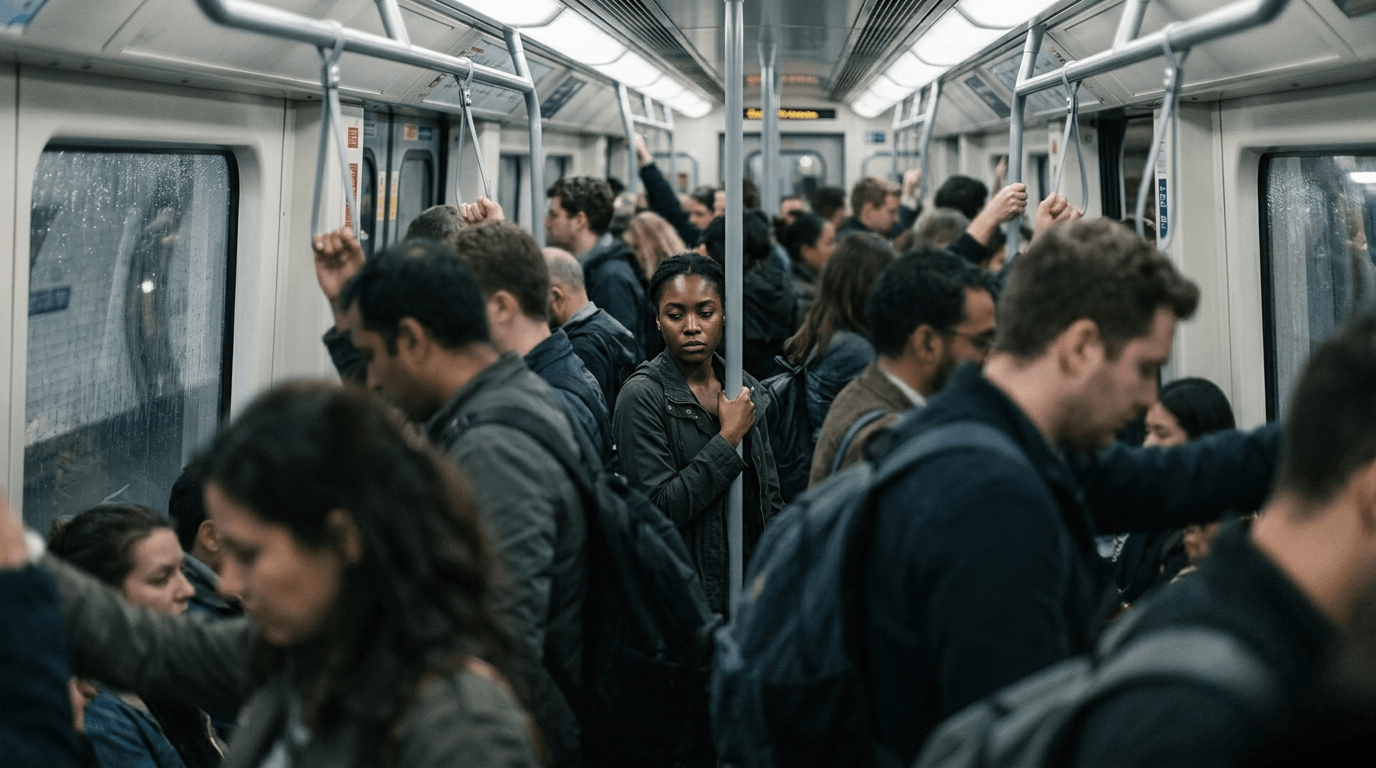
So here’s the thing about modern discrimination—I didn’t think I’d ever struggle to recognize it.
Like, growing up, it felt pretty clear.
Someone says something blatantly offensive?
Yeah, that’s discrimination.
Someone gets treated unfairly in an obvious way?
Also discrimination.
Simple.
Or at least… I thought it was.
Then one random Tuesday (because life-changing realizations never happen on convenient days), I was in a meeting. Nothing fancy. Just one of those slightly-too-long meetings where everyone’s pretending to be focused but secretly thinking about lunch.
And something happened.
Nothing big. No one raised their voice. No dramatic moment.
But afterward, I couldn’t shake this weird feeling like…
“Wait. That didn’t feel right.”
And that’s when it hit me.
Modern discrimination doesn’t always look like discrimination.
Sometimes it just feels… off.
The “Wait, Was That…?” Moments
You ever have those moments where something happens and you’re not sure how to label it?
Like:
- Someone gets interrupted repeatedly in a meeting
- A joke lands… weird
- A compliment feels slightly backhanded
And you’re sitting there thinking,
“Am I overthinking this? Or was that actually not okay?”
That gray area?
That’s where a lot of subtle discrimination lives now.
Not in big, obvious actions—but in these tiny, uncomfortable moments that don’t come with clear labels.

It’s Not Loud Anymore—It’s Quiet (And That’s What Makes It Tricky)
Here’s the difference.
Old-school discrimination—at least the way we learned about it—was loud.
Clear.
Hard to ignore.
Modern discrimination?
It whispers.
It shows up as:
- Being overlooked
- Being underestimated
- Being “othered” in ways that are easy to brush off
And because it’s not loud, it’s easy to dismiss.
Even by the person experiencing it.
Which is… kind of the whole problem.
Story Time (Because This Is Where It Gets Real)
I remember talking to a friend about her job—she’s insanely talented, like the kind of person who makes you question your own life choices in a “wow you’re impressive” way.
And she casually mentioned how people often assume she’s in a junior role.
Even when she’s literally leading the project.
I laughed at first, like, “Wait, seriously?”
And she just shrugged and said,
“It happens.”
No anger. No dramatic tone. Just… acceptance.
And that hit me harder than if she had gone on a rant.
Because it wasn’t a one-time thing.
It was a pattern.
A quiet, persistent thing.
The Workplace Is Full of These Tiny Moments
Honestly, if you want to see modern discrimination in action, just… sit in an office for a while.
Not even in a dramatic way.
Just observe.
You might notice:
- Who gets interrupted (and who doesn’t)
- Whose ideas get acknowledged—and whose get repeated by someone else and suddenly noticed
- Who gets described as “confident” vs. “aggressive”
And it’s not always intentional.
That’s the uncomfortable part.
Sometimes people don’t even realize they’re doing it.
Microaggressions (Yeah, That Word People Argue About)
Okay, I know this term gets thrown around a lot—and sometimes people roll their eyes when they hear it.
But stick with me.
Microaggressions are basically those small, subtle comments or actions that—on their own—might not seem like a big deal.
But over time?
They add up.
Like:
- “You’re so articulate” (said in a way that implies surprise)
- “Where are you really from?”
- Mispronouncing someone’s name repeatedly without trying to fix it
Individually, they might seem harmless.
But imagine hearing variations of that… over and over again.
It’s like a slow drip.
Not enough to flood the room—but enough to make everything damp and uncomfortable.
(Okay that metaphor got weird, but you get it.)
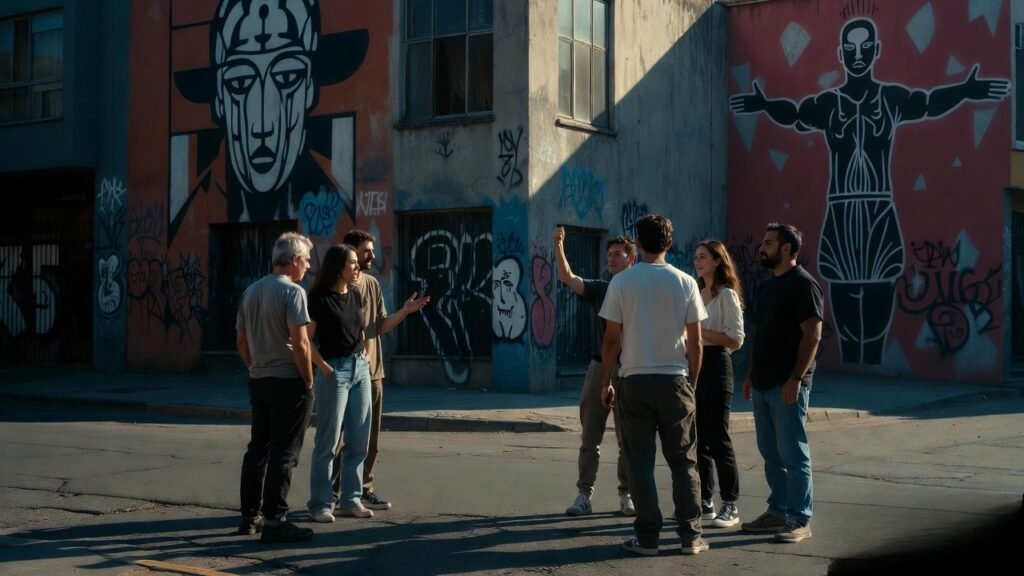
The Internet Made It Both Better… and Worse
Ah yes, the internet. Our favorite chaos machine.
On one hand:
- It exposes discrimination quickly
- It gives people a platform to share experiences
- It creates awareness at a scale we’ve never seen before
On the other hand:
- Everything becomes a debate
- People dismiss real experiences as “overreacting”
- Nuance gets lost faster than my patience in a long comment thread
I once saw a video where someone shared a personal experience, and the comments were like:
- “That’s not discrimination”
- “You’re too sensitive”
- “This happens to everyone”
And I just sat there thinking…
“Or maybe—just maybe—you’re not seeing the full picture?”
The Self-Doubt Is Part of It Too
This one surprised me.
Modern discrimination doesn’t just affect how people are treated—it affects how they feel about those experiences.
Because when something is subtle, you start questioning yourself.
Like:
- “Did I imagine that?”
- “Am I being too sensitive?”
- “Should I say something… or just let it go?”
And that hesitation?
That second-guessing?
It’s exhausting.
It’s Not Always About Bad People (Which Makes It Even Harder)
Here’s where things get… uncomfortable.
Modern discrimination isn’t always about obviously “bad” people doing obviously bad things.
Sometimes it’s:
- Bias people don’t realize they have
- Assumptions shaped by culture, media, upbringing
- Habits that go unexamined
Which means… yeah.
We’ve all probably contributed to it in some way.
Not intentionally. But still.
And realizing that?
Not fun.
Necessary—but not fun.
The “I Didn’t Mean It That Way” Defense
You’ve probably heard this before.
“I didn’t mean it like that.”
And sometimes, that’s true.
But here’s the thing:
Intent doesn’t erase impact.
You can mean well and still say something that lands badly.
I’ve done it. You’ve probably done it.
The key difference is what happens next.
Do you listen?
Do you adjust?
Or do you double down and turn it into an argument?
(We all know which option leads to a better outcome… and which one ruins group chats.)
If You’re Trying to Be More Aware… Same
I don’t have a perfect checklist or anything.
But a few things I’ve been trying (keyword: trying):
- Listening more than I talk (harder than it sounds)
- Asking questions instead of assuming
- Being okay with being wrong sometimes
Also—taking a break when it gets overwhelming.
Because yeah, this topic can get heavy.
A Couple Places That Actually Help (Without Feeling Like Homework)
If you want to understand real experiences without drowning in jargon:
- Personal blogs on Medium (people share honest, messy stories)
- Even some long-form Reddit threads (surprisingly insightful, sometimes chaotic, always real)
Just… maybe don’t read the comments at 2am. Trust me.
So What Does Modern Discrimination Actually Look Like?
Not one thing.
It looks like:
- A comment that feels slightly off
- A pattern you can’t ignore
- A moment you second-guess
- A conversation that lingers in your head
It’s subtle.
But it’s there.
Final Thought (Kinda Rambling, But Stick With Me)
I think the hardest part about modern discrimination is that it doesn’t give you clear answers.
No obvious lines.
No easy labels.
Just… moments.
And what you do with them.
Do you ignore them?
Question them?
Learn from them?
I don’t know.
I’m still figuring it out.
But I do know this—
Just because something is subtle… doesn’t mean it’s small.


