


The phrase “presidential power shifts you didn’t learn in school” popped into my brain a few months ago when I was watching a late-night documentary about George Washington.
I had one of those moments where you sit up and go…
“Hold on. Wait a second.”
Because the presidency we see today — press conferences, executive orders, global summits, Air Force One flying around like a superhero jet — that’s not exactly how the job started.
Not even close.
Early presidents were actually supposed to be… kinda limited.
Like the manager of a store who can run things day-to-day but still has to ask the board for permission to rearrange the shelves.
But somewhere along the line…
Things changed.
Power shifted.
Quietly sometimes.
Other times like a political thunderstorm.
And a lot of those shifts?
Yeah… they barely show up in textbooks.
Back in School, They Told Us the Presidency Was Balanced
Remember high school civics class?
Teacher at the front of the room drawing the famous triangle:
Legislative.
Executive.
Judicial.
Checks and balances.
Everything nice and even.
Everyone behaves.
Honestly, it sounded like a well-organized group project.
Except real history is more like a group project where one person suddenly takes control of the entire Google Doc at 2 AM.
And the presidency slowly — slowly — became more powerful.
Not overnight.
More like… decade by decade.
The First Big Power Shift: Washington Invents the Job
Here’s something wild.
When George Washington became president, nobody actually knew what the job was supposed to look like.
There was no instruction manual.
No previous president.
No “How to Run America for Dummies.”
Washington basically invented half the traditions.
For example:
- creating a presidential cabinet
- establishing executive authority in foreign affairs
- stepping down after two terms
That last one was huge.
It set a precedent that lasted until the mid-20th century.
Imagine if Washington had said:
“Actually I’m just gonna stay president forever.”
The entire political system might’ve evolved differently.
Instead he walked away.
Which — not gonna lie — feels almost impossible to imagine in modern politics.
When War Suddenly Expanded Presidential Power
Here’s the thing about crises.
They change rules.
Fast.
And nowhere was that clearer than during the presidency of Abraham Lincoln.
The American Civil War basically forced Lincoln to stretch presidential authority in ways nobody had done before.
He:
- suspended habeas corpus
- expanded military powers
- issued the Emancipation Proclamation
That last one is fascinating.
Because it wasn’t passed by Congress.
It was issued as a war measure by the president.
And suddenly the executive branch had taken a massive role in shaping national policy.
Some critics at the time were furious.
Others thought it saved the country.
Either way?
Presidential power had just shifted… big time.
Theodore Roosevelt: The “Why Not?” President
Okay, now we get to one of my favorite characters in American history.
Theodore Roosevelt.
This guy treated presidential power like a toolbox.
His philosophy was basically:
“The president can do anything not explicitly forbidden by the Constitution.”
Which… wow.
That’s bold.
Roosevelt expanded the power of the presidency in ways that shocked people at the time.
He:
- aggressively regulated monopolies
- created massive national park protections
- intervened in labor disputes
- flexed U.S. power internationally
It was like the presidency suddenly switched from caretaker mode to action hero mode.
Imagine the presidency before Roosevelt as a sedan.
After Roosevelt?
More like a pickup truck with a turbo engine
The New Deal Explosion of Executive Power
Then came the earthquake moment.
The Great Depression.
Enter Franklin D. Roosevelt.
And suddenly the federal government expanded in ways nobody had seen before.
The New Deal created programs that reshaped the economy:
- Social Security
- federal job programs
- banking regulation
- economic relief programs
But here’s the deeper shift.
The presidency became the center of economic leadership.
Before that, Congress handled much of the heavy lifting.
After Roosevelt?
Americans began expecting presidents to fix economic crises.
Which is… a lot of pressure for one office.
The Cold War Turned the President into a Global Leader
Another huge presidential power shift you didn’t learn in school happened after World War II.
Presidents suddenly became the central figures in global diplomacy and military strategy.
Think about leaders like:
- Harry S. Truman
- Dwight D. Eisenhower
Truman authorized the use of atomic weapons during the World War II.
He also helped establish NATO and the Cold War containment strategy.
Meanwhile Eisenhower navigated nuclear tensions with the Soviet Union.
Suddenly the president wasn’t just a national leader.
He was basically the most powerful geopolitical decision-maker on Earth.
That’s a pretty dramatic upgrade from the early presidency
A Weird Personal Memory About Presidential Power Shifts
Back in high school, my history teacher made presidents sound… calm.
Predictable.
Like every decision went through committees and debates.
Years later I started reading more history and realized:
Presidential power often expands during moments of chaos.
War.
Economic collapse.
National emergencies.
Basically the exact moments when everyone says:
“Okay… someone needs to make a decision right now.”
And guess who that someone usually is?
Yep.
The Modern Presidency Is Basically a Giant Spotlight
Fast forward to recent decades and the presidency has become something else entirely.
The modern president is expected to be:
- chief executive
- commander-in-chief
- party leader
- global diplomat
- national crisis manager
- media personality
All at once.
It’s like five jobs crammed into one.
And the power of the office reflects that.
Executive orders.
Emergency declarations.
Massive federal agencies.
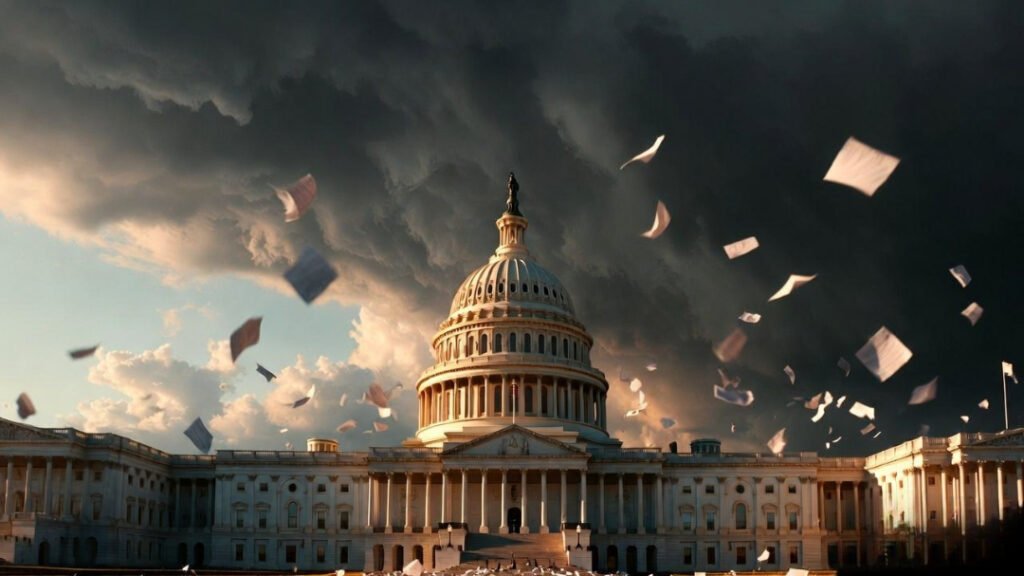
The presidency today would probably look unrecognizable to the founders.
Two Fun Rabbit Holes If You Like This Topic
If you enjoy weird historical deep dives like this, check out:
- The blog Presidential History Geek (great breakdowns of strange presidential moments)
- The political satire at McSweeney’s Internet Tendency
Both are fun reads when you accidentally fall into a late-night history binge.
Which… happens to me more often than I’d like to admit.
The Big Thing School Never Told Us about Presidential Power Shifts
Here’s the strange truth about presidential power shifts you didn’t learn in school.
Power rarely changes all at once.
It creeps.
Slowly.
One crisis at a time.
One precedent at a time.
One bold decision that suddenly becomes the new normal.
And before anyone really notices…
The presidency looks very different than it did fifty years earlier.


