

So the other day I was standing in line at the grocery store—half asleep, holding coffee that tasted like regret—and I noticed something weird.
The coffee bag in my hand had a big “Fair Trade Certified” sticker on it.
And suddenly my brain went:
Wait…
Is that actually better? Or is it just…marketing?
Because if you’ve ever tried to understand Free Trade vs Fair Trade, it kinda feels like someone handed you two identical puzzle pieces and said “one saves the world, the other destroys it.” No pressure.
I remember asking my friend Jake about it once while we were watching football.
He looked at me and said,
“Dude… free trade means cheap stuff. Fair trade means expensive coffee.”
Which… honestly… isn’t entirely wrong. But it’s also not the full story.
So I went down a rabbit hole. The kind where you open 12 tabs and suddenly it’s 2AM and you’re learning about international supply chains while eating leftover pizza.
Anyway.
Here’s the real talk version of the Free Trade vs Fair Trade debate—and what it actually means for America.
First… What Even Is Free Trade?
Okay so imagine this.
Two neighbors.
One grows apples.
The other fixes cars.
Instead of both doing everything badly, they trade what they’re good at.
Boom. Everyone wins.
That’s basically the idea behind free trade.
Countries remove tariffs (taxes on imports), reduce restrictions, and let businesses trade goods across borders more easily.
In theory:
- American farmers sell more crops overseas
- U.S. companies reach global markets
- Consumers get cheaper products
Pretty sweet deal, right?
And historically, free trade has made a lot of things cheaper.
Phones. Clothes. TVs.
My first flat-screen TV cost like $900 back in the day. Now you can buy one for the price of a decent dinner.
That’s global trade doing its thing.
But here’s where people start arguing.
Because cheap stuff sometimes comes with… complicated consequences.
The Moment People Started Questioning Free Trade
I remember driving through a small town in Ohio once.
Old factories everywhere.
Empty parking lots. Broken windows.
You could almost feel the history in the air—like this place used to hum with workers.
And someone told me,
“Yeah… a lot of the manufacturing moved overseas.”
That’s one of the biggest criticisms of free trade.
Companies move production to countries where:
- wages are lower
- regulations are lighter
- costs are cheaper
From a business perspective? Makes sense.
From a local worker perspective?
Not so much.
So while free trade lowered prices, some American communities felt like they got the short end of the stick.
And that’s where fair trade enters the conversation.
Okay… So What Is Fair Trade?
Fair trade is kind of like free trade’s more idealistic cousin.
Instead of just focusing on open markets, fair trade focuses on ethical standards.
Things like:
- Fair wages for workers
- Safe working conditions
- Environmental protections
- No child labor
So when you buy a fair trade product, the idea is that the people who made it were treated fairly and paid properly.
Which is honestly… a pretty nice concept.
You’re basically saying:
“Yeah I’ll pay an extra dollar for coffee if it means the farmer isn’t getting ripped off.”
And sometimes that money actually does go directly to farmers and workers.
But (because there’s always a “but”) the system isn’t perfect.
The Weird Truth: Fair Trade Isn’t Always Fair Either
This part surprised me.
Some economists argue that fair trade certification programs can actually leave out smaller farmers.
Why?
Because certification costs money.
Paperwork. Inspections. Fees.
So sometimes the farmers who can afford certification are already the bigger, more established ones.
Meanwhile tiny farms—who might need help the most—don’t qualify.
It’s a little like organic food labels.
They’re great… but the certification process can be expensive.
So suddenly the system designed to help everyone ends up helping some people more than others.
Human systems are messy like that.
Why the Free Trade vs Fair Trade Debate Gets So Heated
Honestly?
Because both sides have valid points.
And both sides also have… blind spots.
Free Trade supporters say:
- It grows the global economy
- It lowers prices for consumers
- It increases innovation and competition
Which is true.
But critics respond with:
- It can encourage outsourcing
- It may weaken domestic manufacturing
- Workers in poorer countries can be exploited
Also true.
Meanwhile fair trade advocates argue that ethics should matter in global trade.
But critics say:
- Fair trade products are more expensive
- The impact is sometimes limited
- Certification systems aren’t perfect
So yeah.
It’s not exactly a clean debate.
It’s more like… a tug-of-war.
Where America Actually Stands in This Debate
Here’s the funny thing.
The U.S. doesn’t strictly choose free trade OR fair trade.
It kinda does both.
Trade agreements often include:
- labor standards
- environmental rules
- market access policies
For example, trade deals like the modern version of United States–Mexico–Canada Agreement (USMCA) include worker protections that older agreements didn’t.
So trade policy has evolved.
It’s less “wild west capitalism” now and more “open markets but with some rules.”
Still messy though.
Always messy.
The Hidden Benefit of Free Trade Americans Forget
Travel.
Seriously.
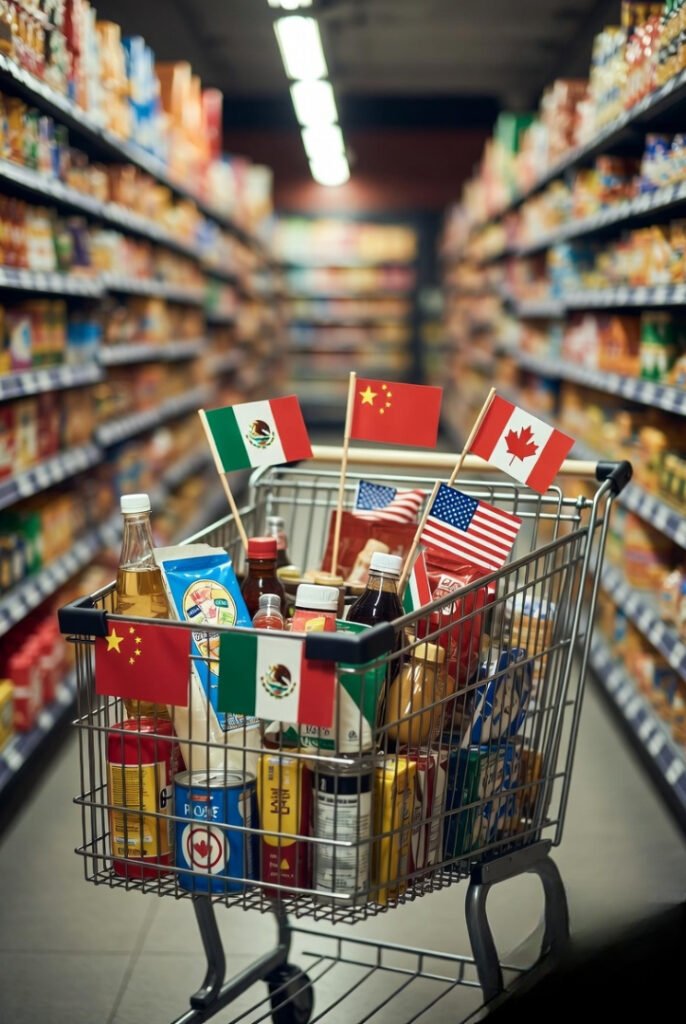
Next time you go to a grocery store, just look around.
Bananas from Ecuador.
Coffee from Colombia.
Electronics from South Korea.
Global trade turned the average supermarket into an international buffet.
Imagine trying to explain avocados to someone in 1950.
They’d probably think it was some kind of alien fruit.
Now we smash them on toast like it’s a human right.
Free trade made that possible.
But Fair Trade Changes How People Shop
Something interesting has happened over the last 20 years.
Consumers started caring more.
About where things come from.
About how workers are treated.
About sustainability.
It’s why fair trade coffee exploded in popularity.
And why brands brag about ethical sourcing now.
Sometimes it’s genuine.
Sometimes it’s… marketing.
But either way, the conversation shifted.
People started asking:
“Cheap for who?”
Which is honestly a pretty powerful question.
The Real Answer: It’s Not Either/Or
If you’re hoping for a dramatic conclusion like:
FREE TRADE IS GOOD
FAIR TRADE IS BAD
—or the other way around—
Sorry.
That’s not reality.
The best trade systems usually combine both ideas.
Open markets plus ethical standards.
Economic growth plus worker protections.
Because a purely free market can ignore human costs…
…but a heavily restricted market can slow innovation and raise prices.
So policymakers are constantly trying to balance those two forces.
Like walking a tightrope while juggling trade agreements.
No big deal.
A Weird Personal Moment That Made This Click
Quick story.
A few years ago I bought two chocolate bars.
One was $1.50.
The other was $4 fair trade chocolate.
I tried them side by side with my roommate.
He took a bite and said,
“This better save the rainforest.”
We laughed.
But then we actually looked up where the cocoa came from.
Turns out the fair trade one was from a cooperative farm that paid farmers significantly more than the commodity market price.
So yeah.
That extra $2.50 did something real.
Not world-changing maybe.
But real.
And that’s kinda the heart of the Free Trade vs Fair Trade debate.
It’s not just economics.
It’s values.
Two Random Links Worth Reading
If you’re curious about how trade affects everyday stuff:
- The quirky economics blog Freakonomics often explains trade debates in surprisingly fun ways.
- And if you want a nerdy but fascinating breakdown of global supply chains, check out World Trade Organization resources.


